Most first-time visitors do the same loop — Dam Square, the Anne Frank House, a Heineken somewhere along a canal. It's fine. But it isn't Amsterdam. The city locals love hides in the side streets, behind unmarked doors, and inside courtyards you'd miss if you blinked.
Start where the tourists don't: the Jordaan's quiet edge
Skip the main artery of the Jordaan and walk the smaller cross-streets between Egelantiersgracht and Bloemgracht. Within a few minutes you'll pass three hofjes — almshouses built around silent courtyards in the 17th century. Most are still inhabited. Walk in quietly, sit on a bench for two minutes, and you'll understand why Amsterdammers say the real city is two metres behind the façade.
"Amsterdam isn't a city of sights. It's a city of detours."
Three hidden gems worth the walk
- Begijnhof — a medieval courtyard with the oldest wooden house in the city. Free to enter, almost always empty before 10am.
- Bloemgracht 87 — a side door that opens onto a tiny garden gallery. Easy to miss; impossible to forget.
- Café 't Smalle — a brown bar from 1786 with a waterside terrace barely wide enough for two chairs. Order a jenever and stay for the second one.
Walk the canals the long way round
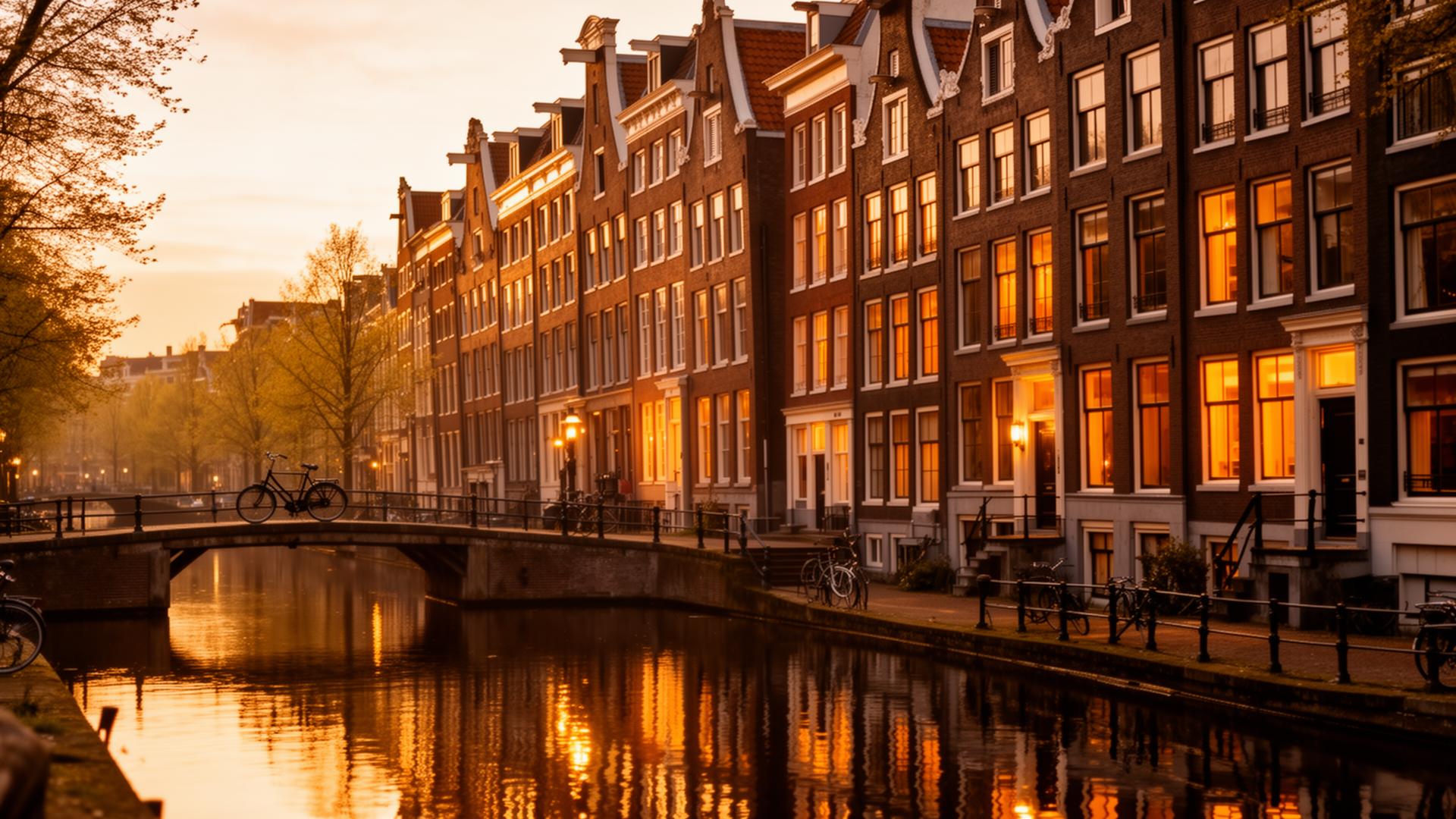
The Grachtengordel looks identical on a map and completely different on foot. From Leidsegracht, head west across Prinsengracht and into the streets behind the Westerkerk. The houses lean further. The bicycles get older. The cafés get cheaper. Stop on Reestraat bridge at dusk — the light there is the reason photographers keep coming back.
A practical loop you can do in an afternoon
- Start at Spui (10 min coffee at Café Luxembourg).
- Walk into Begijnhof — quiet, free, mind-clearing.
- North along Singel, then cross into the Negen Straatjes.
- End on a Jordaan canal bench with a cone of frites.
None of this needs a tour guide or a 6am queue. It needs comfortable shoes, a half-day, and the willingness to walk past the obvious. That, really, is the whole secret of Amsterdam.


